Most Android phones get between three and seven years of security updates. If you want the short answer to how long do Android phones get security updates, it depends on the brand and model, and the clock starts when the phone launches, not when you buy it, so a five-year guarantee can be nearly gone before a secondhand owner unboxes it.
Below is what each major manufacturer currently promises, how to find your own patch date in about fifteen seconds, and what actually changes once the updates stop.
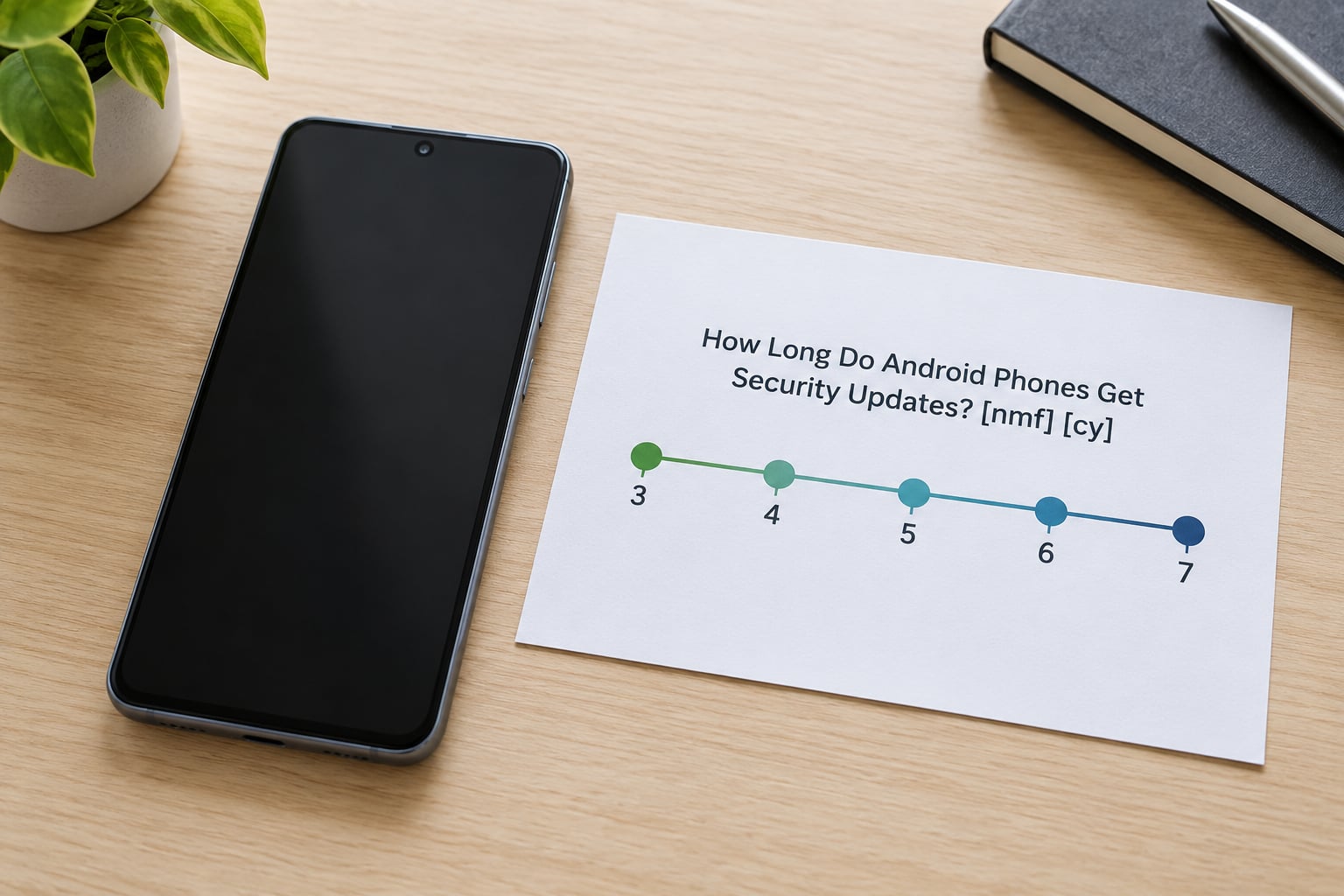
Table of Contents›
- How Long Do Android Phone Security Updates Last?
- What Counts as a Security Update?
- The four kinds of updates your phone receives
- Why Do Android Phone Update Timelines Differ?
- How Long Do Major Android Brands Support Phones?
- Google Pixel: the cleanest promise, the shortest history
- Samsung: the widest guarantee, widest spread
- How long do OnePlus, Xiaomi, Motorola, Sony, TCL, Nothing and Oppo phones get updates?
- Is a seven-year promise always a good thing?
- How to Check When Your Android Phone Stops Getting Updates
- On a Google Pixel
- On a Samsung Galaxy
- On any other Android phone
- Reading the date once you find it
- What to Do When Your Phone Is No Longer Supported
- Frequently Asked Questions
- What does an Android security update actually fix?
- Which Pixel phones are no longer supported?
- What Samsung phones will stop getting updates in 2026?
- How long do Android phones get security updates compared with iPhones?
- Does an unsupported Android phone still work normally?
- What is the oldest Android version that still gets security updates?
- Conclusion
- What Is the Android Security Patch Date?
How Long Do Android Phone Security Updates Last?
Three to seven years is the honest range. Google promises seven years of Android version and security updates for the Pixel 8 line and everything newer, Samsung matches that with its Galaxy S24 series and later, and most other Samsung phones land at four Android upgrades with four or five years of patches. Budget devices from Motorola, Sony and TCL often get one to two years and little else.
The single most misunderstood rule: the support window starts at the device’s launch date. Buying a phone today does not reset anything. A three-year-old flagship still has whatever is left of its original window, and buying it in 2026 from a refurbisher buys you a phone that is already halfway through.
Some concrete anchors as of October 2026. The Pixel 6 and Pixel 6 Pro reached end of security updates on 1 October 2026. The Pixel 7 series and Pixel 7a are on the same short timeline and lose support shortly after. Anything from the Pixel 8 onward still has most of a seven-year run ahead of it. On Samsung’s side, the Galaxy S24 and S25 families are built for seven years, while Galaxy A-series and older S-series models are typically on four to five years.
What Counts as a Security Update?
A security update is a patch that fixes a vulnerability someone has already found. It is not the same thing as a new Android version, and separating the two makes the whole topic easier to reason about.
The four kinds of updates your phone receives
- Monthly security patches. Fixes listed in Google’s monthly Android Security Bulletin, covering the OS, bundled apps and drivers. Flagships usually get these every month.
- Scheduled patch bundles. Some brands ship quarterly or twice-yearly instead, bundling several months of fixes into one release. Owners in r/sysadmin and r/Android generally treat those dates as the real signal of whether a device is still maintained.
- Google Play system updates. Separate lightweight releases for Play Store components and some system services. These can patch something without changing the security patch level.
- Major Android version upgrades. The yearly Android release, which also carries security fixes. Running an old Android version is common and not automatically a problem, because patches can be backported.
A phone can stay on Android 13 for years and still be properly patched, as long as it keeps receiving the monthly bulletin fixes. Equally, a phone on the latest Android version that got its last patch a year ago is not secure. The patch level date is the number that matters, not the version number.
Why Do Android Phone Update Timelines Differ?
Google publishes the Android security update program, and manufacturers commit to it. But Google does not set your phone’s support period. Each brand decides how long it keeps building kernel and driver patches for the specific chipset it chose, which is why support lengths vary so much.
Component suppliers matter as much as the brand. Qualcomm and MediaTek both publish their own security bulletins, and a phone only stays patchable while those upstream pieces are still maintained. Once the chipset vendor stops, the manufacturer cannot keep patching alone.
Then there is the commercial side. Carriers change what they push, budget lines get shorter windows to keep costs down, and enterprise devices commonly run five years or more under Android Enterprise, longer than the consumer equivalent. Forum owners have also noticed that promised monthly patches sometimes slip, so treat the guarantee as the outer bound rather than a schedule.
OnePlus community threads make a related point: most people replace a phone after roughly three and a half years. That is shorter than any current flagship support window, which is why some buyers treat a long promise as valuable only if they keep the device that long.
How Long Do Major Android Brands Support Phones?
These are manufacturer commitments as of October 2026. They vary by series, region and model, so treat the table as the starting point rather than the final word.
| Brand | Android version updates | Security updates | Series with the longest support |
|---|---|---|---|
| Google Pixel | 7 years (Pixel 8 and newer) | 7 years (Pixel 8 and newer) | Pixel 8, 9, 10 lines |
| Samsung Galaxy | 7 years (S24 and newer), otherwise 4 | 7 years (S24 and newer), otherwise 4 to 5 years | Galaxy S24, S25 lines |
| OnePlus | 4 Android upgrades on recent flagships | 4 years plus extended security | Recent OnePlus flagship line |
| Xiaomi | 3 to 4 Android upgrades on newer flagships | 4 to 5 years; shorter on budget lines | Xiaomi flagship line |
| Motorola | 1 to 3 upgrades depending on tier | 1 to 3 years on most devices | Recent Motorola Edge line |
| Sony | 2 Android upgrades | 2 to 3 years | Xperia 1 and 5 lines |
| Honor | Up to 7 years on flagship Magic models | Up to 7 years on Magic models | Magic flagship line |
| Nothing | 3 Android upgrades | 3 years plus extra patches | Recent Phone series |
| TCL | 2 to 3 Android upgrades | 2 to 3 years | Recent 50 series |
Google Pixel: the cleanest promise, the shortest history
Pixel has gone from three years of updates on the Pixel 4 era to five on Pixel 6 through 8, and seven from the Pixel 8 onward. The downside is how quickly the early devices fall off. The Pixel 5 lost support in October 2023, and the Pixel 6 line runs out on 1 October 2026. Google publishes the schedule on its Pixel phone help page, which is the most reliable source there is.
Samsung: the widest guarantee, widest spread
Samsung covers more series for longer than anyone else, but the tiers matter enormously. Galaxy S24 and S25 get seven years. Most recent Galaxy S and A series get four Android upgrades and four to five years of security patches, and some entry-level A-series models still get far less. Samsung’s Security Update Scope page lists every eligible model and its monthly or quarterly schedule, which makes it the single most useful page on this topic.
How long do OnePlus, Xiaomi, Motorola, Sony, TCL, Nothing and Oppo phones get updates?
The rest of the market sits in the middle and varies sharply by price tier. Recent OnePlus and Nothing flagships land around four Android upgrades with three to four years of security patches, and Oppo and Honor’s Magic lines now match Google’s seven years. Xiaomi’s flagships are competitive while its budget Poco and Redmi lines are not, and the gap between them can be four years. Motorola and Sony sit at the short end, which is the most common complaint in r/Android about mid-range hardware that costs close to flagship money.
There is also a Fairphone case worth knowing: the Fairphone 3, released in 2019, was still receiving security patches in 2026. Nobody mainstream does that, but it proves long support is a business choice rather than a technical wall.
Is a seven-year promise always a good thing?
Not entirely. Owners on r/OnePlus and r/pixel_phones point out the other side: you keep a slower chip for longer, battery health degrades, and some features get tuned for newer hardware. A seven-year guarantee is worth the most if you plan to keep the phone, and it is mostly reassuring paperwork if you upgrade every three years anyway.
How to Check When Your Android Phone Stops Getting Updates
This is a fifteen-second check, and it tells you more than any marketing page. Paths differ slightly by brand, so try the one that matches your device first.
On a Google Pixel
Open Settings, tap About phone, then look for Android version and Security patch level. The patch level sits directly under the Android version, formatted as a date. That date is the most recent fix included on your phone, published by the Google Pixel update schedule in the same section.
On a Samsung Galaxy
Open Settings, tap About phone, then tap Software information. Security patch level appears there with the date. To see whether more is coming, check Software update and Download updates, or look your model up on the Samsung Security Update Scope page.
On any other Android phone
Settings, then About phone, then tap Android version. On many skins the security patch line is hidden behind that tap rather than shown on the About phone screen. Samsung calls it Software information, OnePlus and Xiaomi bury it under About phone with a tap on Android version, and older Android versions may show only a patch level with no separate security update section.
Reading the date once you find it
If the patch date is within the last few months, you are current. If it is a year or more old, the phone has stopped receiving patches even if the Android version looks modern. When you know the date, look your exact model up on the manufacturer’s support page or on Android Update Tracker to find its final scheduled month.
What to Do When Your Phone Is No Longer Supported
An unpatched phone is not instantly compromised. Nobody breaks into a device because it missed a patch. The real risk is that known exploits stay open, which matters more for banking, email and work accounts than for casual use.
Start with the basics: install anything still pending, remove apps you no longer use, and make sure Google Play and Play Protect are set to update automatically. Avoid sideloading from outside the Play Store, since that is where most malicious Android code comes from. Turn on two-factor authentication on your banking and email accounts so a stolen password alone is not enough.
Then use the phone more carefully. Stick to known sites, avoid links in unexpected texts, and keep it off public or unfamiliar Wi-Fi for anything sensitive. Most readers in this position fall into one of three groups: they replace the phone, they hand it to a family member as a light-use device, or they hold on out of cost and reduce what they do on it. Any of those is reasonable if you know the trade-off.
If you are retiring it, wipe the device and factory reset it before you sell, donate or recycle it, so your accounts and photos do not travel with it.
Frequently Asked Questions
What does an Android security update actually fix?
An Android security update is a patch released through the monthly Android Security Bulletin that fixes vulnerabilities discovered in the operating system, bundled apps and drivers. It arrives separately from the yearly Android version upgrade, and its date shows up in your phone settings as the security patch level.
Which Pixel phones are no longer supported?
The Pixel 5 lost security updates in October 2023, and the Pixel 6 and Pixel 6 Pro reached end of support on 1 October 2026. The Pixel 7 series and Pixel 7a follow on the same short timeline. Pixels from the Pixel 8 onward carry seven years of security updates from their 2023 launch.
What Samsung phones will stop getting updates in 2026?
Samsung support ends model by model rather than all at once, so there is no single cutoff year. Galaxy S24 and S25 models run to roughly seven years, while most Galaxy A-series and older S-series phones get four Android upgrades and four to five years of security patches. Check your exact model on the Samsung Security Update Scope page.
How long do Android phones get security updates compared with iPhones?
Apple supports iPhones far longer than most Android makers. It typically provides five to seven years of iOS updates for a current handset, while Android phones range from one year on budget models to seven years on recent Google Pixel and Samsung flagships. Older Pixel and mid-range Android models are where the gap is widest.
Does an unsupported Android phone still work normally?
Yes. A phone past its support window still calls, texts and runs apps, because security updates are not required for basic operation. What changes is that newly discovered exploits stay unfixed, so the practical risk is to banking, email and work accounts rather than to everyday use. Keeping apps and Play Protect updated still helps.
What is the oldest Android version that still gets security updates?
Android 11 and Android 12 phones have largely reached the end of their guaranteed support windows, although they still receive Google Play system updates. Fairphone’s Fairphone 3, launched in 2019 on Android 9, is a documented exception still receiving security patches in 2026. For mainstream brands, Android 13-era hardware is a realistic floor for supported devices.
Conclusion
Check two things today: the security patch level in your About phone settings, and your model’s final support date on the manufacturer’s support page. If the patch date is more than a year old, treat the phone as a light-use device, and start planning a replacement if it holds your banking or work accounts.
What Is the Android Security Patch Date?
The security patch date is the month and year of the most recent security fix shipped to your device. Read it as a record of the last known fix included, not a promise that everything after that date is handled. A date that keeps moving forward means the phone is still maintained; one frozen months ago means support has stopped.