The only way to tell is to measure energy with a real meter, not to read the box. If you push a fully charged power bank through an inline USB energy meter into a fixed load until it shuts itself off, then compare the delivered watt-hours with the rated capacity printed on the label, you have an answer in about three hours. No app can do this for you, and no amount of charging your phone will tell you precisely what is happening inside.
The reason people get it wrong is that mAh is not a unit of stored energy on its own. It only means something alongside a voltage, and power banks store energy at 3.7 V while handing it out at 5 V or more. So a 20,000 mAh bank is not supposed to deliver 20,000 mAh, and expecting it to is the fastest way to call an honest bank a fake.
Below is the full method: the label checks that cost nothing, the meter setup that avoids the trap that makes most readings return zero, the arithmetic for turning a reading into a verdict, and what to do when the number comes back low. If all you want is the short version, run the discharge test and look for 80% to 92% of the rated capacity.
Table of Contents›
- What You Need
- Step-by-Step: How to Tell If a Power Bank Is Actually the Capacity It Claims
- 1. Check the Port and Output Labels
- 2. Look for Internal-Capacity and Certification Claims
- 3. Set Up a Known Test Baseline
- 4. How to Tell If a Power Bank Is Actually the Capacity It Claims: Measure Energy
- 5. Convert the Results and Account for Losses
- 6. Judge the Results and Repeat Suspicious Tests
- Common Mistakes
- Frequently Asked Questions
- What percentage of the advertised capacity should a power bank actually deliver?
- Can I test a power bank without a USB energy meter?
- Does a power bank rated at 20,000 mWh really contain 20,000 mAh?
- Why does my power bank test slower or weaker with my phone?
- Is it safe to test a swollen, hot or damaged power bank?
- Conclusion: Start With the Label, Then Measure the Output
What You Need
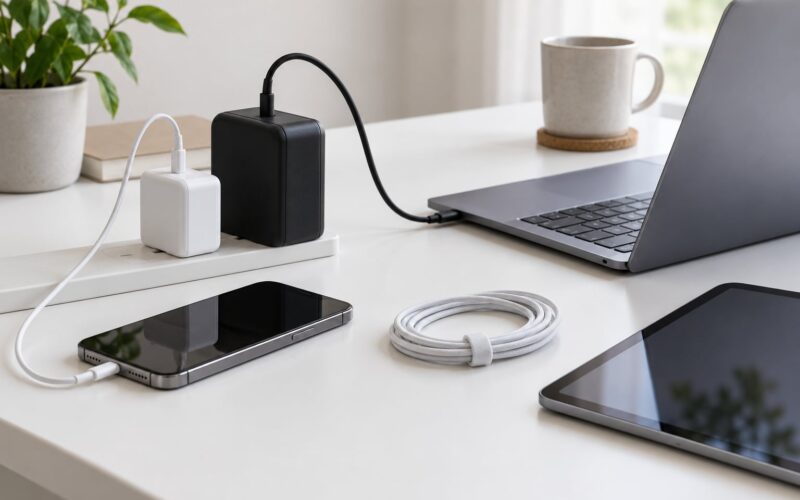
You need four things, and only one of them costs money.
- The power bank, charged to full on its own wall charger until the indicator stops moving.
- A device with a known battery state, or a fixed load. A phone works, but a phone is a moving target because its charging current changes as it warms up and as its own circuit throttles.
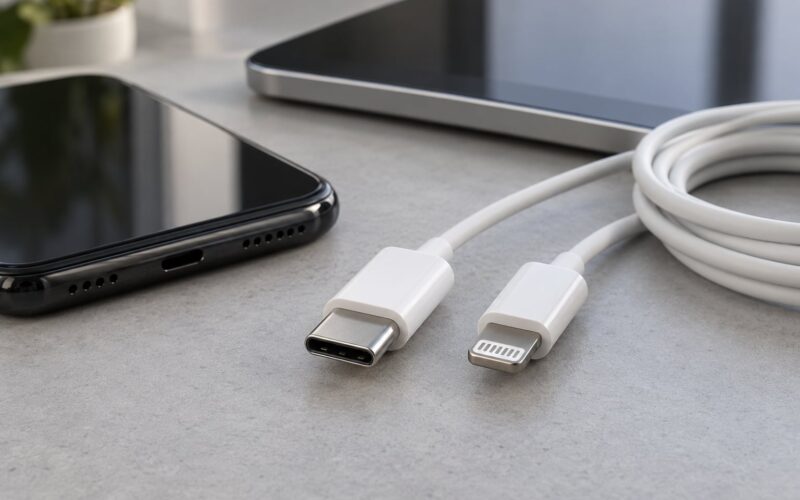
- A compatible USB cable, short and undamaged. A worn cable thins the current and quietly understates the bank.
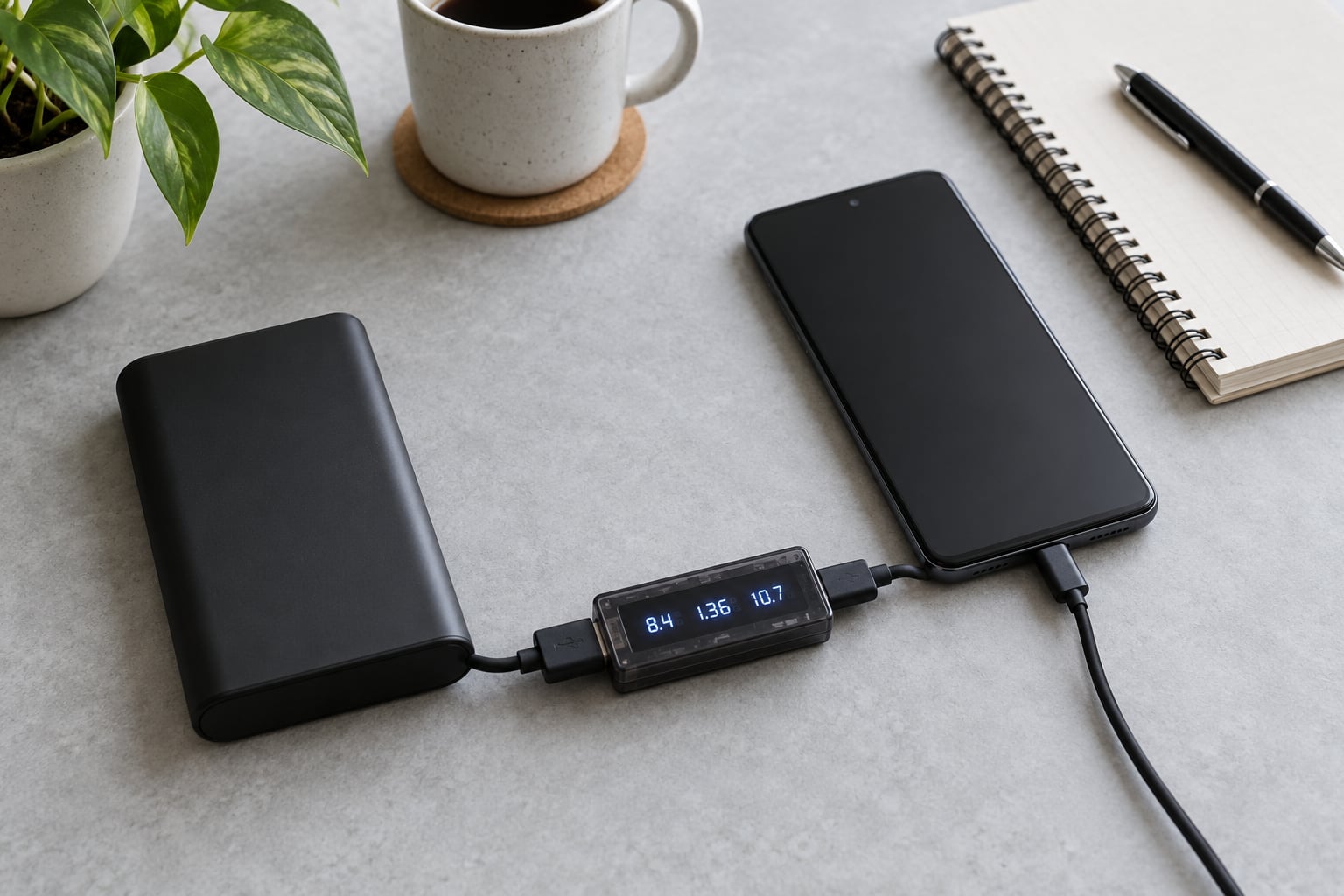
- A USB energy meter that reports watt-hours, inline between the bank and the load.
That last item is where most buying guides go wrong. Many meters sold as USB testers only report instantaneous current, or only negotiate protocols and display voltage. A meter showing a steady 5.11 V and nothing else is not broken, it is just not measuring anything because no current is flowing. What you want is a meter with a running total: watt-hours, accumulated milliamp-hours, or both.
An inline USB-A meter with a running mAh and Wh counter is enough for almost any power bank. For a USB-C bank that negotiates Power Delivery, a bidirectional USB-C meter is the better tool because it logs the negotiated voltage as well, which matters once you are comparing 5 V output against 9 V or 20 V output.
Step-by-Step: How to Tell If a Power Bank Is Actually the Capacity It Claims
Verification happens in six stages, and the order matters. Reading the output ports first tells you what the bank claims to be. Reading the internal capacity label tells you what it stores. Only then does the meter tell you what it delivers, and only after that can you separate normal conversion loss from an inflated claim.
1. Check the Port and Output Labels
Start with the ports. Every power bank states its input and its output, and the output line is where the misleading claims live.
A label reading 5 V/3 A, 9 V/2 A, 12 V/1.5 A and 20 V output describes the maximum power it can deliver at that moment. It says nothing about how much energy is stored. A bank can advertise 65 W of output and hold 5,000 mAh, and a bank can advertise 10 W and hold 20,000 mAh. Both are legitimate; they are different products.
What the output line does tell you is whether the bank is even worth testing properly. If it lists several voltage profiles, the energy measurement has to be repeated at each profile, because pumping energy up to 20 V costs more than pumping it to 5 V.
2. Look for Internal-Capacity and Certification Claims
Now find the rated capacity, which is a different number from the battery capacity in the headline. Battery capacity is the sum of the internal lithium cells at their nominal 3.7 V. Rated capacity is what the manufacturer says the bank can deliver at its output port, and it is always the smaller figure.
Look for four things on the case or the manual: the rated capacity in mAh, the energy in watt-hours, the model number, and the regulatory symbols. A 20,000 mAh bank at 3.7 V stores 74 Wh, so an airline-legal bank should print something like 74 Wh and a rated capacity near 13,000 mAh at 5 V. When only the big cell number appears and the rated capacity is missing entirely, that is your first warning.
The certification marks are weaker evidence than people assume. An FCC or CE mark means the unit was submitted for electromagnetic and safety testing on radio and charger behaviour. It is not a capacity audit, and no regulator weighs the cells for you. Certification records tied to a model number are worth a look, because a model that exists in the database and a model that exists only on a marketplace listing are different things.
3. Set Up a Known Test Baseline
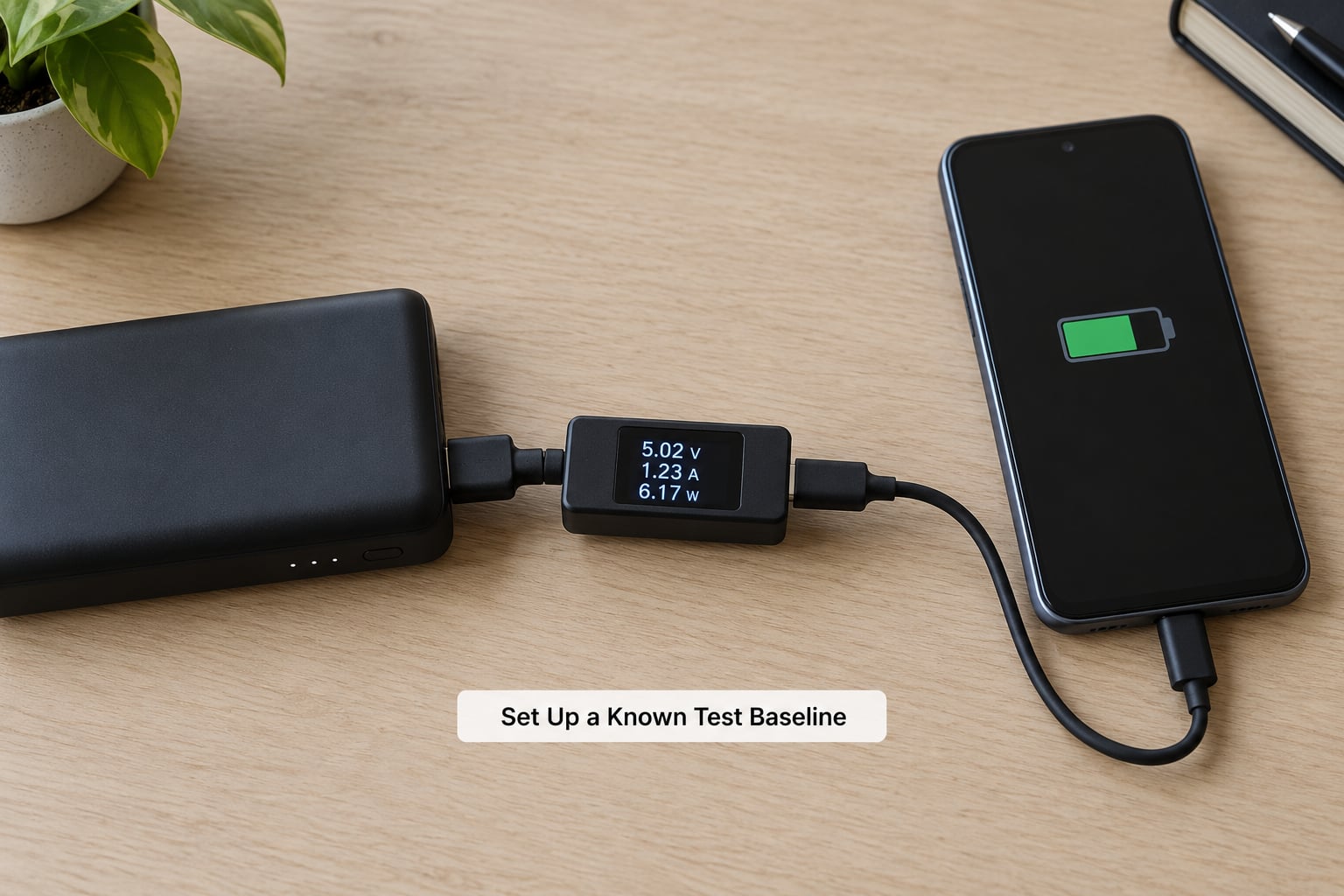
Give the test a starting point you can come back to. Charge the power bank fully first, on its own cable, until it reports full and stays there.
Then prepare the device on the other end. Note its exact battery percentage, drop screen brightness to the lowest usable level, turn off background syncing, location, and any app that keeps the screen awake. Check the phone’s own battery health in settings while you are there, because a worn battery stops accepting charge early and will read as a weak power bank when it is not.
Room temperature matters more than people expect. Keep the test between about 20 and 25 °C, off a lap, and away from a window. A bank that is cold from a car or hot from a charger will deliver less than its label, and that has nothing to do with honesty.
4. How to Tell If a Power Bank Is Actually the Capacity It Claims: Measure Energy
This is the stage that produces a number. The discharge test runs about two to three hours for a small bank and considerably longer for a 20,000 mAh unit.
- Charge the power bank to 100% on its own input, then unplug it and let it sit for fifteen minutes so the reading settles.
- Set up the meter inline. Power bank to the meter’s input, meter output to your device or load. This position matters, because a meter that is not in the current path accumulates nothing.
- Fix the load. On a phone, that means stopping the charge once the screen is off and nothing is drawing power, so the bank runs at a steady draw. A dedicated load tester set to 1 A or 2 A gives a cleaner, more comparable result.
- Start the test and note the time. Watch that current is actually above zero. If the display shows a voltage but 0.00 A, the bank is idle or in pass-through mode, not discharging.
- Record voltage, current and watt-hours as they change. A falling voltage with steady current is normal as the pack empties.
- Let it run until the bank shuts itself off. Ending the test early, or reading the total while the bank is still awake, gives a number that is far too low and causes most false failures.
- Read the accumulated watt-hours, and the accumulated mAh if the meter reports it, straight after shutdown.
Some banks support pass-through charging, where you can charge the bank and a phone at the same time. Do not test in that mode. Pass-through banks hold current nearly idle and some meters report zero, which is the exact confusion that runs through the forum threads on this topic. One poster in r/batteries saw 5.110 V and zeros across three different banks, and the problem was the setup, not the batteries.
5. Convert the Results and Account for Losses
Compare in watt-hours. It is the only unit that survives a voltage change, and it is what the label should have printed anyway.
One formula does all the work:
Usable mAh at 5 V = advertised mAh × 3.7 / 5 × converter efficiency
Run it for a 20,000 mAh bank at 90% converter efficiency and you get 13,320 mAh. At 85% you get 12,580 mAh. That range, not 20,000, is what a passing result looks like.
| Advertised capacity | Energy stored at 3.7 V | Expected usable mAh at 5 V | Rough real charges on a 5,000 mAh phone |
|---|---|---|---|
| 5,000 mAh | 18.5 Wh | 3,000 to 3,500 mAh | About one full charge |
| 10,000 mAh | 37 Wh | 6,000 to 7,000 mAh | About one and a half charges |
| 20,000 mAh | 74 Wh | 12,000 to 14,000 mAh | About three charges |
| 26,800 mAh | 99 Wh | 16,000 to 19,000 mAh | About four charges |
Worked example: the meter totals 60 Wh. Divide by the rated capacity of 74 Wh and the bank delivered 81% of its stored energy, which sits inside the normal band. If the same meter reads 22 Wh, the bank is not lossy, it is empty, and no amount of waiting fixes that.
To go the other way, convert watt-hours to amp-hours by dividing by the output voltage you measured. 60 Wh at 5.05 V is about 11,880 mAh at 5 V, which is the figure that belongs in the same row of your notes as the rated capacity.
6. Judge the Results and Repeat Suspicious Tests
Here is the decision rule I use. Percentages are measured energy against the rated capacity printed on the label, not against the headline number.
| Delivered vs rated capacity | Verdict | What to do |
|---|---|---|
| 90% to 100% | Excellent | Nothing, this is a good bank |
| 80% to 90% | Normal loss | Expected for a quality unit |
| 70% to 80% | Low but plausible | Repeat once before you complain |
| Below 70% | Suspect | Retest with a fresh cable and a different load |
| Below 50% | Inflated claim | Return it, and report the listing |
The tolerance band is not arbitrary. A 2023 peer-reviewed analysis of power bank quality criteria in the proceedings of the International Conference on Applied Sciences concluded that actual capacity runs at roughly two thirds of the indicated figure across the sample it examined. Forum consensus lines up, with users on the Samsung and lowyat threads reporting that decent banks hand over around 70% to 80% of rated capacity while cheap imitations fall well below that. A bank passing above 80% is doing better than the academic average, which is normal for a well-made unit.
If a result comes back low, change one variable at a time. Swap the cable, because a damaged cable is the cheapest fix. Try a different device or a proper load tester, since a phone can stop accepting charge on its own. Retest at 5 V even if the bank offers 9 V or 12 V, because the higher profiles lose more energy and make an honest bank look weak.
Sanity-check the meter too, by running a known load for a known time and confirming the total is in the right ballpark. An error-prone meter that reads ten percent high will make every bank look ten percent better than it is, and you cannot tell the difference without a reference.
Do not open the bank. Cracking the case on a lithium pack to read the cells is how people get punctured cells, and the number you get is not worth it. Do not run a reverse-current charge test either. Keep the discharge test in the open, on a non-flammable surface, where you can see it, and stop immediately if the case swells, bulges, smells sweet or runs hot.
One free check sits before any of this. Airlines cap spare lithium at 100 Wh in carry-on baggage without approval, which is about 27,000 mAh at 3.7 V. A listing claiming 50,000 mAh or 100,000 mAh is either illegal to fly with or arithmetically dishonest, and the cell arithmetic proves it. Four 18650 cells at 2,450 mAh each is 9,800 mAh. Eight gives roughly 20,000 mAh. When a listing claims 100,000 mAh from a handful of commodity cells, the arithmetic is not ambiguous.
Common Mistakes
Reading the input instead of the output. Metering what flows into the bank while it charges tells you about the charger, not the bank. Measure on the way out.
Comparing mWh straight against mAh. These are not the same unit and the comparison is meaningless. Divide the watt-hours by the output voltage you measured.
Trusting the fast-charging label. A bank that pushes 20 V delivers visibly less total energy than the same bank at 5 V, because raising voltage costs efficiency. Test at 5 V when you are checking capacity.
Ending the test when the phone stops charging. The bank usually still holds a lot of energy. Only the reading at automatic shutdown counts.
Believing a full battery icon. Phones routinely show 100% early, then trickle for another half hour. The icon is not a measurement.
Testing a cold or hot bank. Temperature changes the result by more than most efficiency differences do. Warm the bank to room temperature and wait.
Blaming the bank for a tired phone battery. A phone at 80% original capacity will stop accepting charge well before full and will make a good bank look bad.
Getting 0.00 A and 0 mAh and giving up. This is the single most common result and it means no current was flowing. The meter must sit inline, the load must be drawing, and pass-through charging must be off.
Frequently Asked Questions
What percentage of the advertised capacity should a power bank actually deliver?
Compare measured energy against the rated capacity on the label, not the headline number. A quality bank delivers roughly 80% to 92% of rated capacity, and a 2023 peer-reviewed analysis found the average closer to two thirds of indicated. Below 70% deserves a retest; below 50% means the claim is inflated.
Can I test a power bank without a USB energy meter?
Only loosely. Charging a phone repeatedly and counting full charges gives you a range, not a measurement, because the phone stops accepting charge at different points each time. A USB meter that logs watt-hours turns guesswork into arithmetic, and it is the single tool that makes a verdict defensible.
Does a power bank rated at 20,000 mWh really contain 20,000 mAh?
No, and the two numbers come from different places. 20,000 mAh is the cell capacity measured at the 3.7 V nominal cell voltage, which is 74 Wh. The rated output capacity at the 5 V port is closer to 12,000 to 14,000 mAh for the same energy. Read the rated capacity line, and use watt-hours as your common unit.
Why does my power bank test slower or weaker with my phone?
Three usual reasons. The phone’s charging circuit accepts less current as it warms up and throttles near full, so the load is never constant. Fast-charge profiles above 5 V lose more energy in conversion. And a phone with degraded battery health cuts off early, so you are measuring the phone as much as the bank.
Is it safe to test a swollen, hot or damaged power bank?
No, and this is not a judgement call. A swollen, hot, dented or sweet-smelling lithium pack can go into thermal runaway without warning, and it needs a fire-safe container, not a meter. Do not open, puncture, or reverse-charge it either. Take it to a battery recycling point or the retailer who sold it to you, and describe the damage when you ask about a replacement.
Conclusion: Start With the Label, Then Measure the Output
The shortest path to a verdict takes fifteen seconds and one afternoon. Read the rated capacity and the watt-hour figure off the case first, and treat any listing with no rated capacity at all, or a claim far past what the airline 100 Wh limit allows, as suspect before it arrives. Then run one discharge test through an inline energy meter at 5 V into a steady load, let the bank shut itself off, and read the total watt-hours.
Divide by the rated capacity, multiply the result by the 3.7-to-5 volt factor for a comparable amp-hour figure, and compare against the tolerance band. Above 80% is a bank that keeps its word. Below 70%, change one variable and run it again. Below 50% and you have your answer, and it is the number the box never printed.